From farmto global market.
How coconut travels from smallholder farms in South India to buyers abroad — described in the terms we use on the ground, with a check at every stage.
The journey of a coconut
Eight stages, one chain.
Select a stage — or use the arrow keys — to see what happens there, how it's checked and which products pass through it.
Sourcing
Bought at the farm gate, every day of the year.
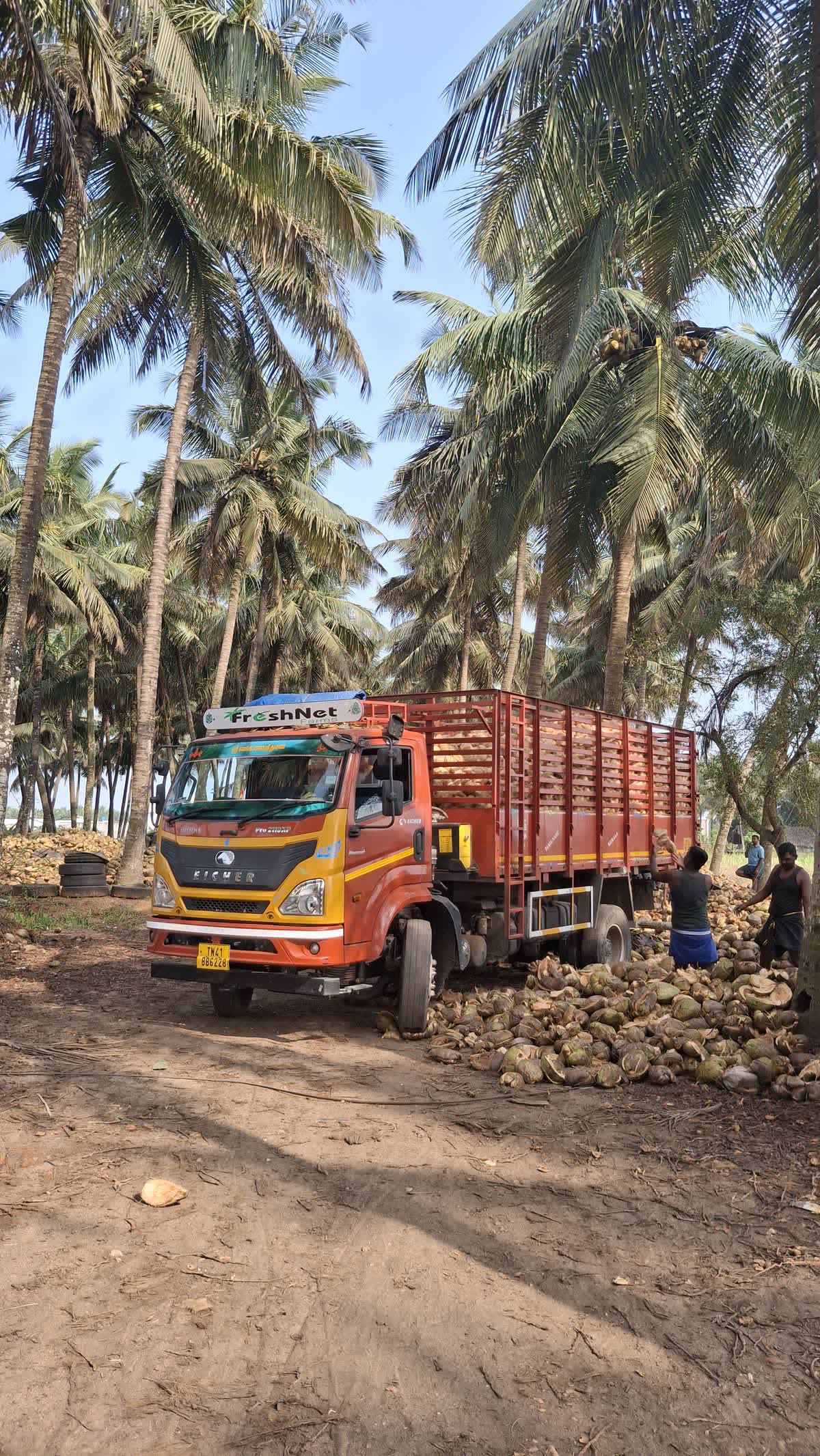
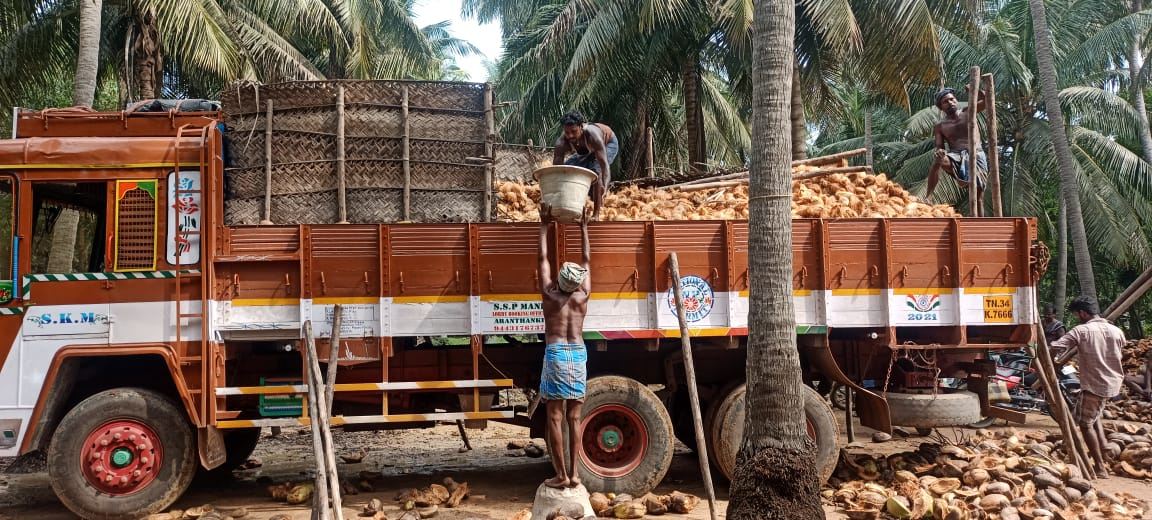
Our supply starts with smallholder farmers across Tamil Nadu, Kerala and Karnataka. Coconut Collection Centres in the villages give them a market that doesn't depend on a trader turning up.
- Direct procurement from farmers and farmer producer organisations
- Collection centres in the villages, open 365 days a year
- Electronic weighing, with digital payment usually within an hour
- Every grade bought — what doesn't suit export goes to Indian buyers and processors
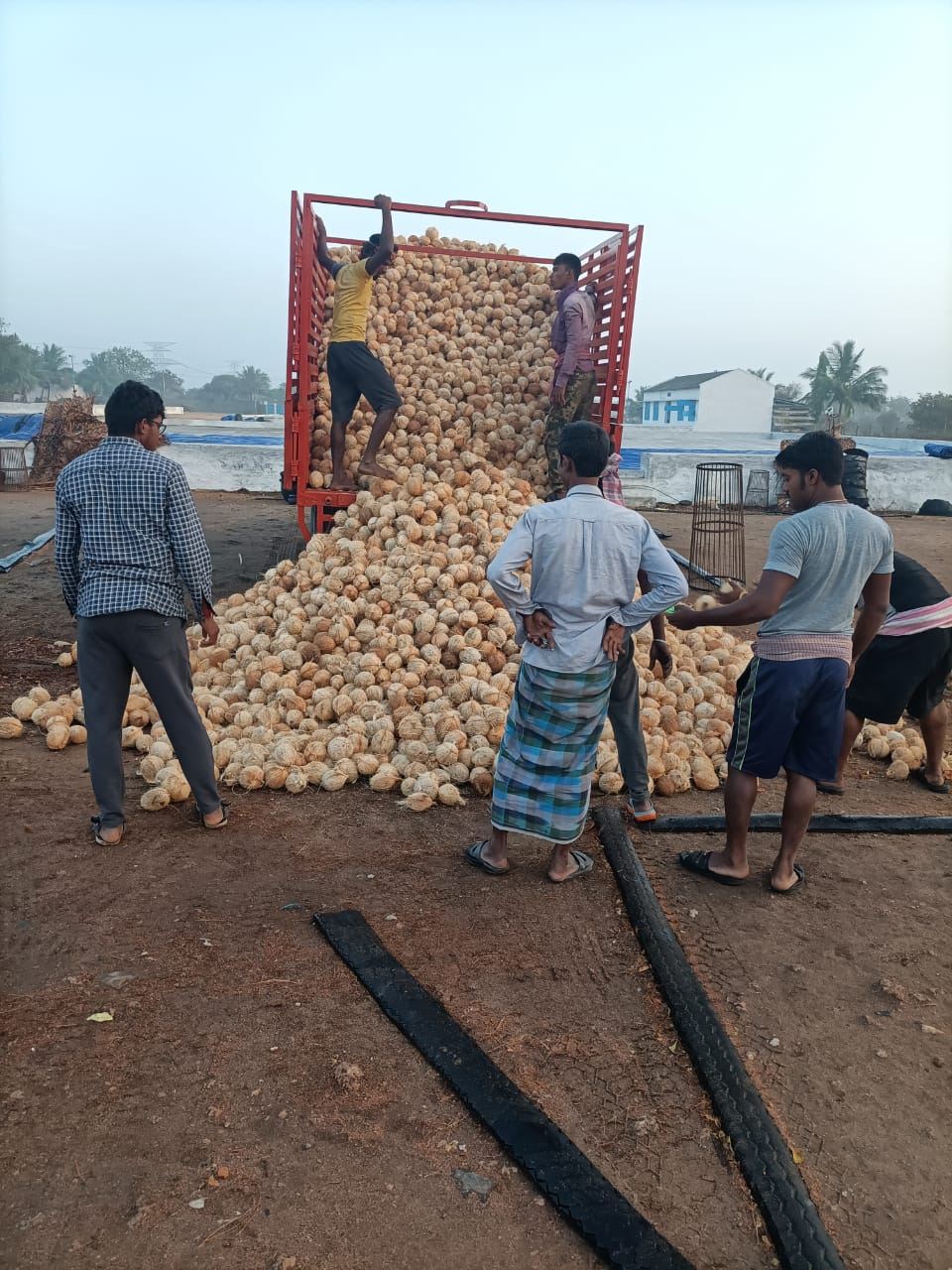
- Transport and harvest labour where farmers need it
Sorting, grading & quality
Graded to the bag, checked to the specification.
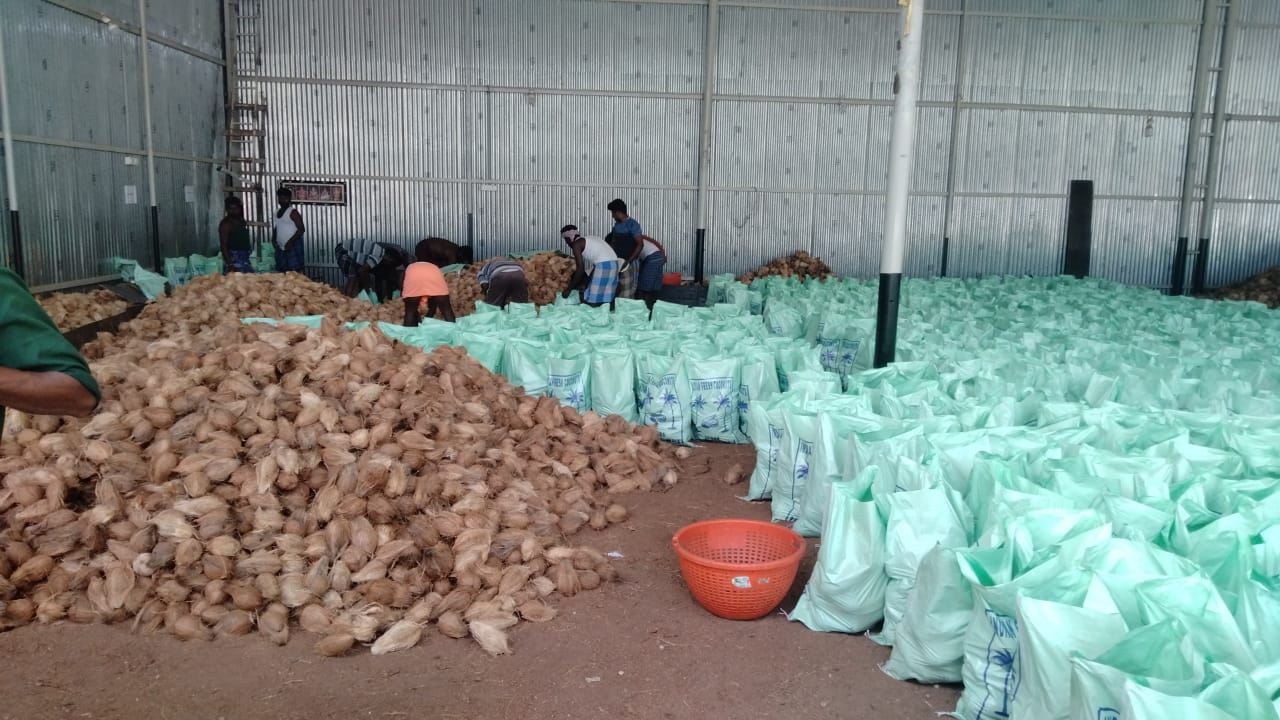
Fresh nuts are graded into weight bands that differ by destination. Choose a bag format to see its band.
| Product | What we check | Specification |
|---|---|---|
| Fresh coconut | Maturity, curing, weight, colour | ~60 days maturity · cured 15–30 days · export-brown colour |
| Copra | Moisture, free fatty acid, broken and mouldy cups | Moisture 5% max · FFA < 0.5% |
| Cocopeat | EC, pH, screen, weight, foreign material | pH 5.5–6.5 · 6–8 mm screen · 5 kg ± 100 g · no foreign material |
Processing
What we do today — and what's next.
Our fresh coconut is minimally processed: cured, husked to the required finish, graded and packed. Copra is dried kernel. Deeper processing is on our roadmap, and labelled as such.
Primary processing
- Curing after harvest Fresh coconut
- Semi-husking and de-husking Fresh coconut
- Sorting and grading by weight Fresh coconut
- Packing to destination format Fresh coconut · cocopeat
- Drying kernel into copra Copra
- Shell recovery Coconut shell
- In-house processing of copra, cocopeat and shell Copra · cocopeat · shell
- Cocopeat grow bags Cocopeat
Building next
- Coconut oil 2027–29
- Tender coconut 2027–29
Packaging
One chain, different formats.
Formats differ by product and destination. Choose a product; request a quote for a format straight from the list.
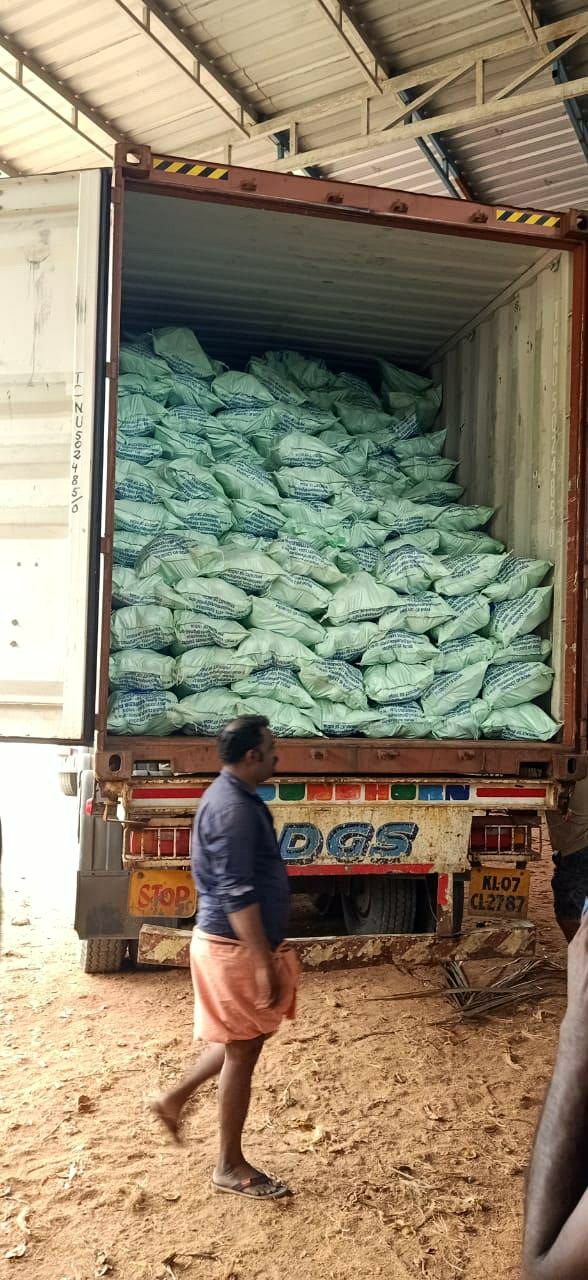
Export
Loaded at the packhouse, to the load plan.
Containers are loaded at our export packhouse near Pollachi and dispatched for shipment.
- Container
- 40′ FCL
- Semi-husked
- Up to 2,200 bags · 28,600 kg
- De-husked
- 1,080 bags · 24,300 kg
- Shelf life
- 45–60 days after packing (semi-husked)
- Registrations
- APEDA · FIEO · Coconut Development Board
- Documentation
- Confirmed per shipment
Traceability
From the farm gate to the container, on record.
Every purchase is weighed and recorded today. Linking each lot back to its farms is what we're building now.
- CurrentWeighed at purchase
Electronic weighing and digital payment record each purchase.
- In developmentFarmer records
A database of partner farmers, their acreage and yields.
- In developmentBatch-coded lots
Coded lots that trace delivered coconuts back to their farm sources.
- In developmentQR traceability
Farm-to-container traceability, part of our 2026–27 foundation phase.
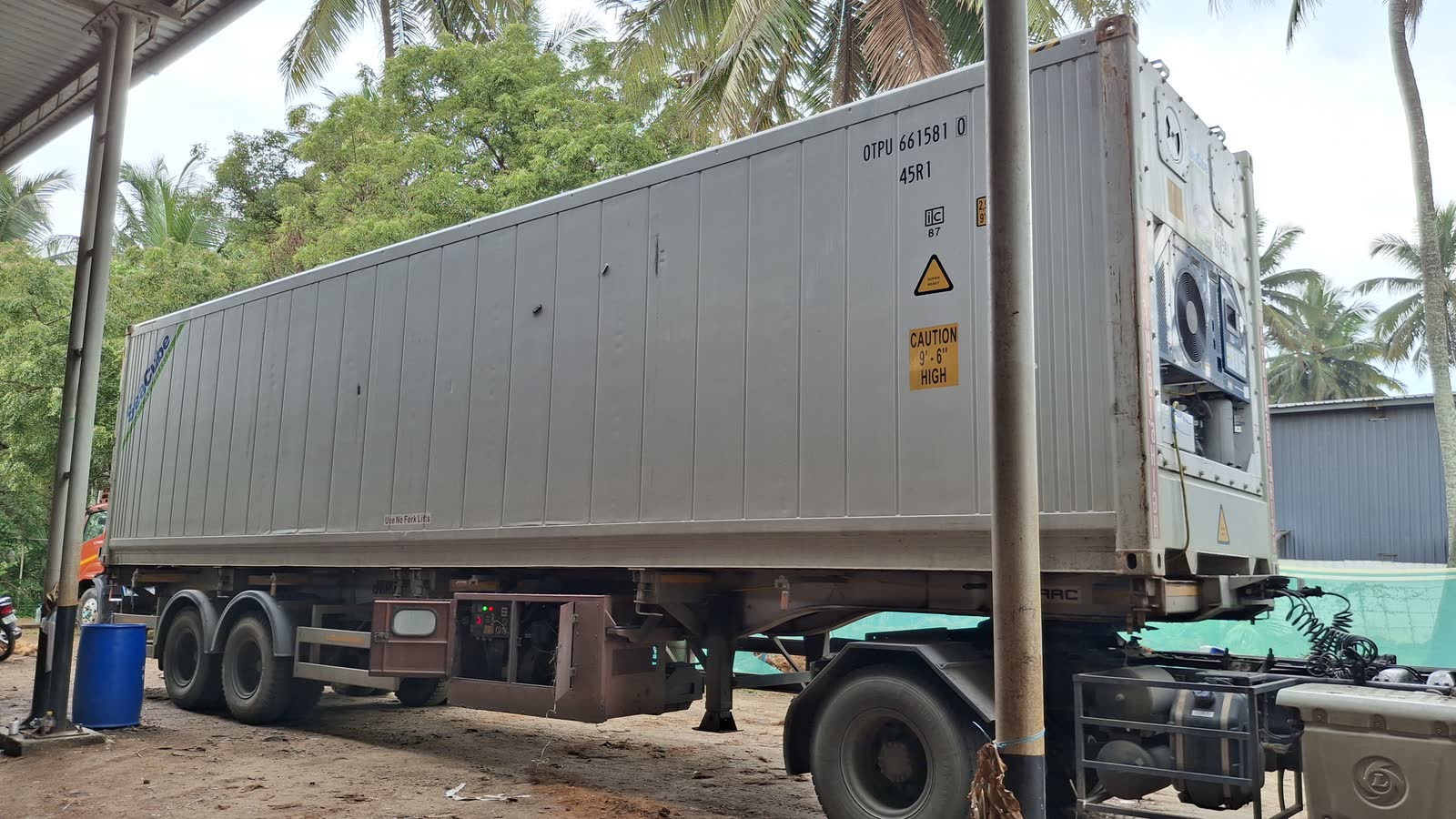
The end of the chain
The global buyer.
Importers, wholesalers, distributors and processors across the Middle East, Europe and India — each receiving product to their own specification.